
The Case for Embracing Uncertainty
By Styx Nappier

I never thought my 20s would be spent familiarizing myself with a dorm toilet. Its white, porcelain shape staring me down as I spend most mornings trying not to heave up last night’s dinner, terrified by the world.
My phone screams the newest headlines, interpolated with reminders of my loved ones. I grip my skin, rock back and forth and try to remind myself things will be OK. This routine has become part of my wake-up call, allocating time to ground myself amid … everything.
The taunt of uncertainty haunts me. But I must persist.
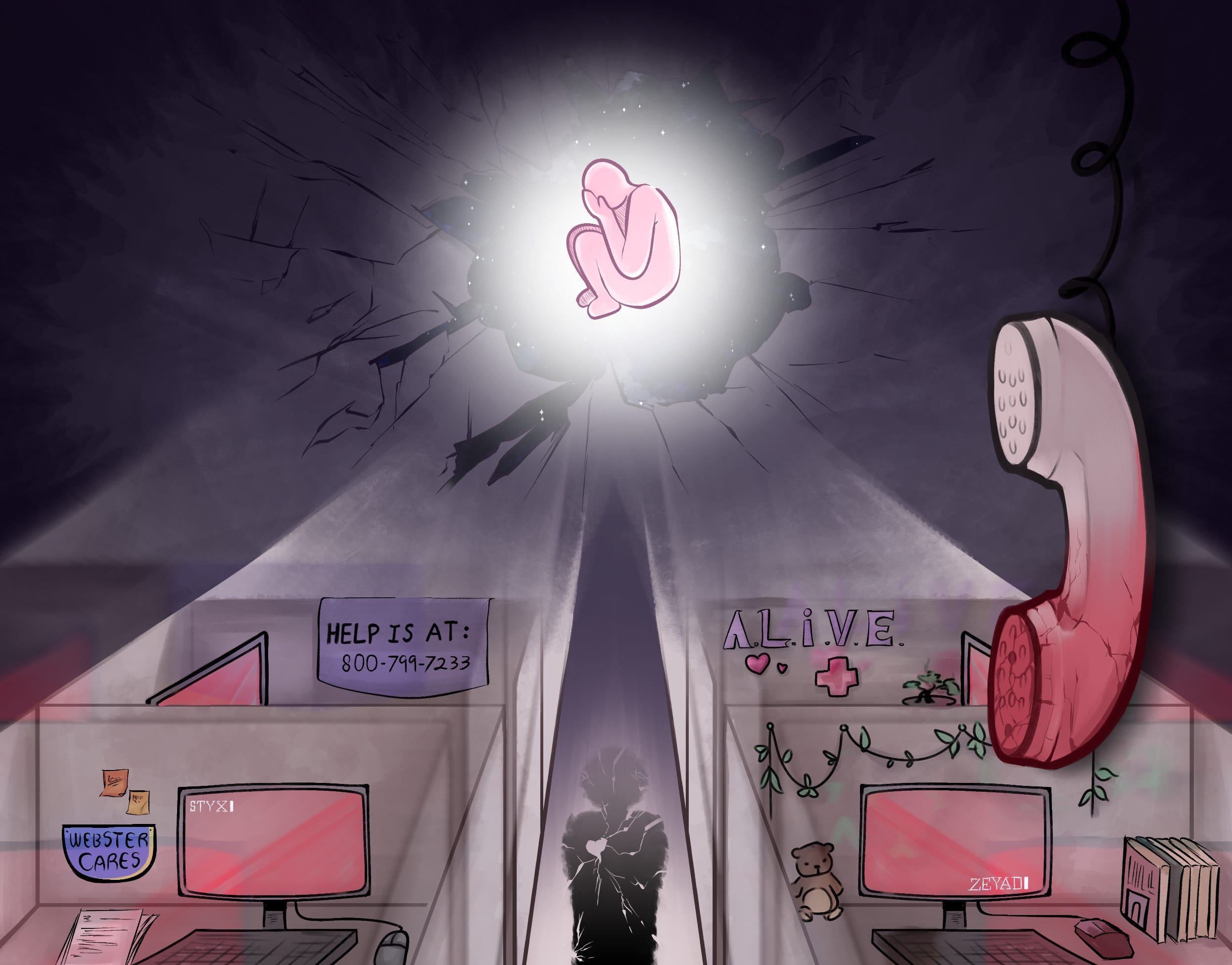
This past summer, I started an internship with a domestic violence nonprofit called ALIVE (Alternatives to Living In Violent Environments). It required hours of training and further understanding of the nature of abuse.
Current estimates suggest nearly one-third of women, one-fourth of men and half of transgender people have faced some form of abuse. While I am also a victim of abuse, I am still in awe of its scope.
I counted faces around me and wondered how many theoretical others understood this fear. How many of them escaped this fate? I didn’t know.
As the summer progressed, I used my journalistic skills to write about ALIVE’s staff and board members. I learned that many of them were like me, survivors who chose to help others.
One member, in particular, stuck with me as she shared about her experience interning near the beginning of ALIVE’s journey — roughly 35 years ago. Many things have changed since then. The organization no longer uses their own homes to provide shelter to victims and has expanded to many more staff members.
Despite our work being years apart, we both can vividly remember a family seeking help. And while the situations were different, with hers being a direct client interaction and mine an overheard phone call — neither can be quick to forget.
It’s the moment a victim is affirmed by a professional for the first time, when you can hear them choking back sobs and questioning what will happen next.
It’s the heartbreak of a mother’s love piercing through her collected façade, spilling out the ever-so-common phrase, “I just don’t want my kids to hate me. I don’t want them to think I’m leaving them.”
It’s the voice of a coworker in the next cubicle responding, “You’ve done great, mama. I know this is a lot, but you have made amazing first steps.”
It’s watching an entire team root for somebody to be freed.
But it’s never that easy.
I hear myself in dozens of phone calls, typing while listening to victims terrified to admit to this danger, to take the plunge into uncertainty, in hopes of emerging a survivor.
I can’t blame their hesitation. I was them. I am them.
On average, it takes victims seven notable incidents to leave their abuser. What these incidents look like can shift and change. For me, a singular incident looked like months of boundary-breaking, bending my beliefs to fit the mold of someone else’s vision.
Abuse was my life. It had engraved itself into my routines, from waking hours until I finally passed out from exhaustion at night. To not live this was hardly a considerable possibility. I went as far as believing that my own love was so strong, that this incessant nausea was simply butterflies in my stomach — a response my body has refused to forget, years later.
And I was no mother with children, I was no adult with roots in my community. I was a high-schooler who hardly had begun to live, already wondering how the funeral would end.
I am still reminded of the tender scars — tears glimmering as the sun rises, heaving an empty stomach into breathless gasps — terrorized by the world.
But I made it out … mostly. The cogs finally clicked and I knew I couldn’t take it anymore. I bent and I broke and I breathed again. It took years of work, a count I am still adding to with each passing day.
The how is difficult, but the why remains clear: We must persevere.
Those once-sobbing mothers on the phone now stand before me, their children giggling as they run around the office’s waiting room. They returned to us for therapy to heal and relearn what love is. They were ready to lose everything to be free, heads held high as they emerge victorious.
So, in their spirit, I fight a little harder to embrace the day’s uncertainty and remind myself just how strong a survivor can be — that we, too, can be free.